Online training login

Thank you to Julie King for this blog to mark Human Rights Day 2025.
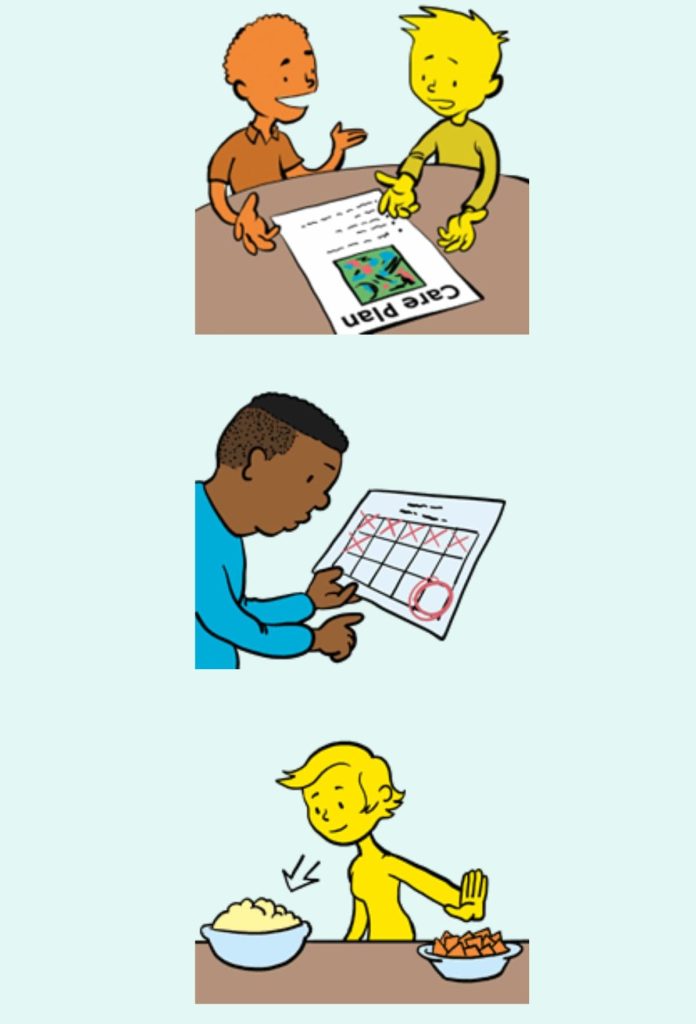
When we use tools like Talking Mats, we create space for honest conversations, meaningful choices, and genuine inclusion. Having a voice and being part of decisions that shape our lives, is a human right, not a privilege.
What Is Supported Decision-Making?
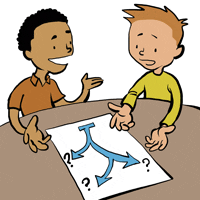
Supported decision-making is about walking alongside people as they explore their options, understand what matters to them, and take part in decisions that shape their lives. Although this approach is highlighted in the UN Convention on the Rights of Persons with Disabilities (UNCRPD), its values reach far beyond it. Anyone who needs support to be involved in decisions has the right to receive that support.
It’s a compassionate, rights-based view of autonomy and inclusion—recognising that people may make decisions independently, with support, or somewhere in between, depending on what they need.
Human Rights and Ethical Practice
Human rights are not determined by someone’s capacity. A person’s capacity can vary and depends on the decision at hand, but their right to be included in decisions about their life never changes. Tools like Talking Mats help create ethical, rights-based practice by:
• Reducing power imbalances
• Challenging assumptions about ability
• Ensuring decisions reflect the person’s own views
These principles are closely aligned with human rights law and best-practice guidance on supporting capacity and consent.
How Talking Mats Helps
Talking Mats is an evidence-based communication tool that utilises symbols and a visual scale to help individuals think about topics that matter to them in a structured manner. It can be used across various areas of life, from everyday choices about personal care and routines, to decisions about where and with whom someone lives, health and wellbeing, representation and advocacy, and planning for the future.
This year we launched Capacity; enabling supported decision making and we have 2 new opportunities for practitioners to develop their skills in this area.
1. Advanced Webinar: Supporting Capacity Decisions
Feb 24th 9.30am – 12.30pm
For practitioners who have already completed the foundation Talking Mats training. This session will focus specifically on supporting capacity decisions, providing practical strategies and enhanced skills to apply in your daily practice.
Cost £95 including the Capacity Resource
2. Combined Foundation Training: Capacity Assessment and Supported Decision-Making
For organisations who want their staff to develop skills in Talking Mats, we are introducing a trial Capacity and Talking Mats foundation course integrating the core Talking Mats framework with a particular emphasis on capacity assessment and supported decision-making. We are offering this at an introductory rate for the first two organizations to book before the end of March 2026. This training is for up to 16 people and includes 4 copies of the new Talking Mats , Capacity; Enabling supported decision making resource If this is of interest to your organisation ask info@talkingmats.com to send further details.
On Human Rights Day, let’s reaffirm our commitment to honouring each person’s choice, dignity, and autonomy. Supporting someone’s communication isn’t just helpful—it’s a vital part of respecting their human rights.
A new report with a focus on children’s participation will launch on Thursday, 10th December. John Swinney, Depute first minister of Scotland said that “The UNCRC (Incorporation) (Scotland) Bill will revolutionise the way we listen to children and take their rights into account”
In 2018, the first review of ‘Ready to Act’ took place: a plan with bold ambitions and a key focus on child participation. Around the same time the Scottish Government was making plans to incorporate UNCRC into law. In preparation for this, the Chief Allied Health Professions Officer, approved project funding for Talking Mats Social enterprise to investigate what was happening across our services in Health, Education and the Third sector. The question we focused on was ‘How much did practitioners understand about the obligations of UNCRC Article 12 and what were they doing to ensure child participation?’.
We chose 3 services who were already committed to upholding children’s rights. We wanted to share good practice and identify areas requiring further support.
- Indigo childcare, a Glasgow based social enterprise. They support families with children from birth up to the age of 16yrs.They provide a platform for improved life chances for young people.
- Langlees Primary school in Falkirk was working towards a Gold Rights Respecting Schools Awards and has an explicit focus on pupil wellbeing.
- Children and Young People’s Occupational Therapists – Fife Health & Social Care Partnership were focussing on increasing the involvement of children and young people in therapy decisions.
Practitioners were trained in how to use Talking Mats. Over three months they were asked to give children and young people a space to share their views. We gathered all the learning and asked the children about how they felt. The overwhelming comment was “It was nice to be listened to” Many practitioners reflected that when CYP are given the opportunity to voice their opinions and are supported to come up with their own solutions, real change happens.
I’m sure John Swinney is right, one thing that will revolutionise our practice is by ensuring our services adhere to the three UNCRC core principles of Dignity, Equality and Respect. We can then incorporate those shared values to give space, voice, audience and influence to the views of our children and young people and that will radically change our approach. We are delighted that this report called Can Scotland Brave will launch on Human Rights Day, Thursday 10/12/20 .
Discuss the report and celebrate with us at our Twitter Chat from 7.30-8.30pm. Watch this space for our second blog which will include more information about the chat.